Purpose of Training
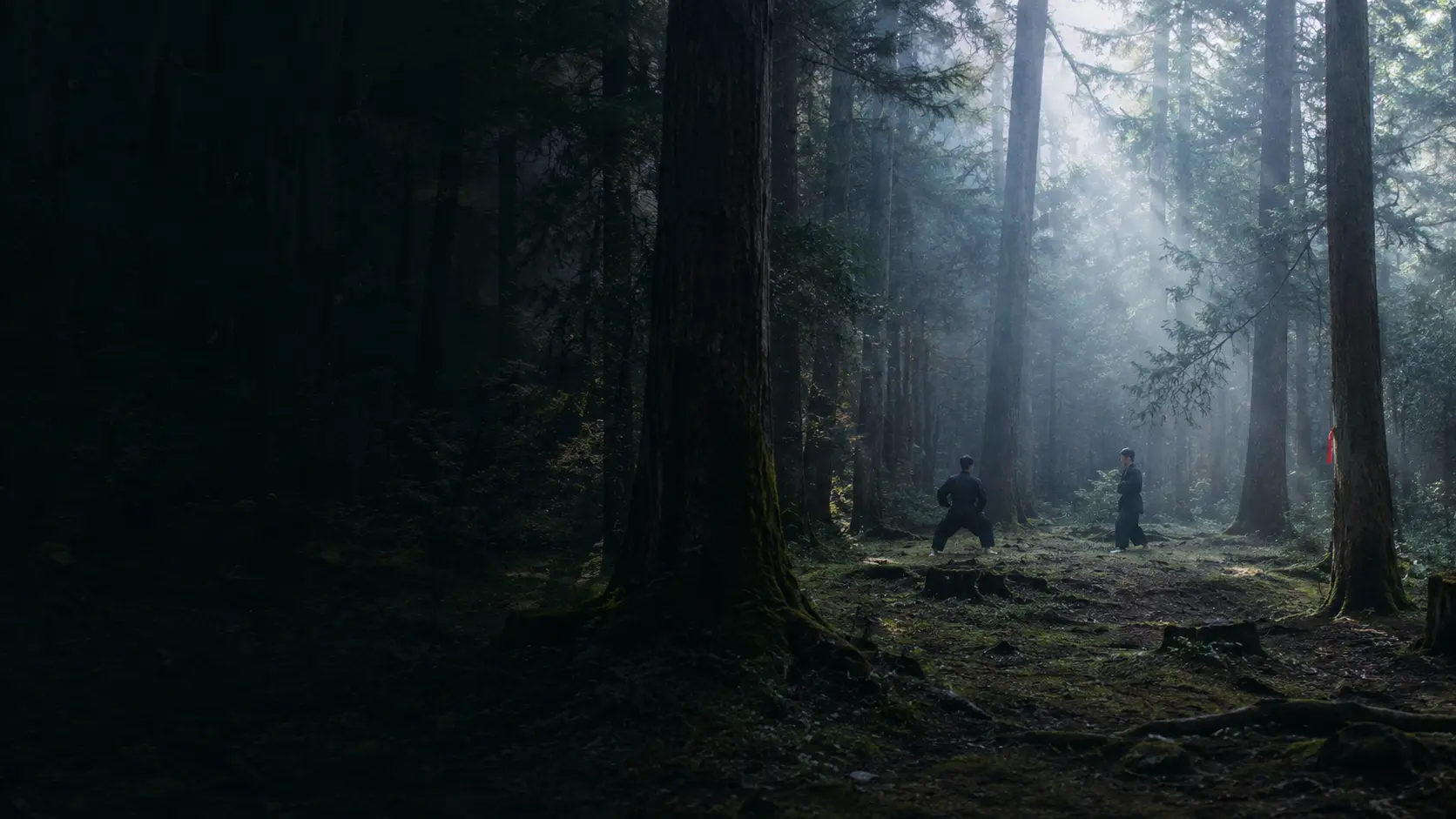
Move Naturally, Adapt to Reality
Rather than memorising one technique as a fixed answer, connect Kamae, Maai, Tai Sabaki and Kuzushi to develop a body that can respond to the situation.
Training is adjusted to participants’ experience, the season, weather and ground conditions, with safety as the priority. Repeated fundamentals reveal the principles shared by unarmed and weapons practice, indoor and outdoor settings, and form and application.
Foundations of Movement
Fundamentals, Kamae & Tai Sabaki
Fundamental Movement
Coordinate breathing, posture, alignment and weight shifts to prepare a body that moves without strain.
Kamae · Postures
Through postures such as Ichimonji, Hira, Jumonji and Hicho, learn positions that keep protection and movement connected.
Tai Sabaki · Body Movement
Move off the line of attack, change angle and position, and flow naturally into the next movement.
Maai · Distance & Timing
Read your partner’s weapon, speed and intention to judge the distance and timing of an attack.
Kuzushi · Unbalancing
Use posture, direction and timing to change your partner’s balance without pushing with force.
Ukemi · Receiving Falls
Practise forward, backward and sideways Ukemi and rolls, protecting the body while moving on uneven ground.
Principles of Attack & Defence
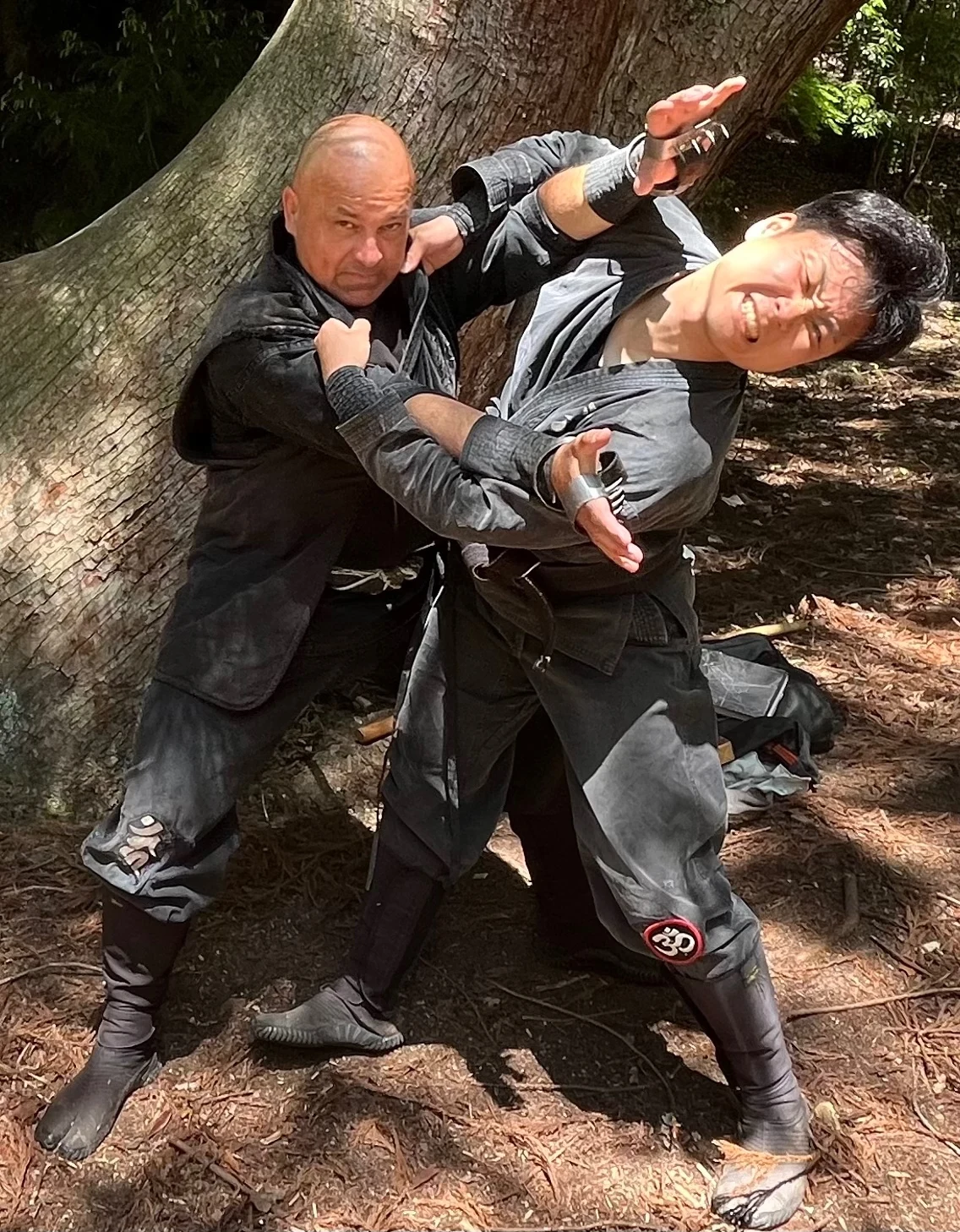
Strikes, Throws & Joint Techniques
Striking
Use fists, hands, elbows and legs with coordinated distance, angle and body alignment. Deflection and Atemi work together to create your next position, rather than relying on force.
Throws
Sense your partner’s balance and movement, allowing Kuzushi to lead naturally into a throw. Progress gradually after checking ground conditions and safety.
Joint Techniques
Understand the structure of the wrist, elbow and shoulder to establish control without excessive force. Adapt to resistance and changes of direction, beyond the fixed shape of a technique.
Shinobi Movement Skills
Shinobi Walking, Jumping & Climbing
Shinobi Walking
Coordinate sound, posture, gaze and the feeling under your feet to move quietly and safely over different terrain.
Jumping & Taihenjutsu
Study jumps and rolls as ways to avoid obstacles and attacks and change position, rather than as acrobatic displays.
Climbing & Shoten no Jutsu
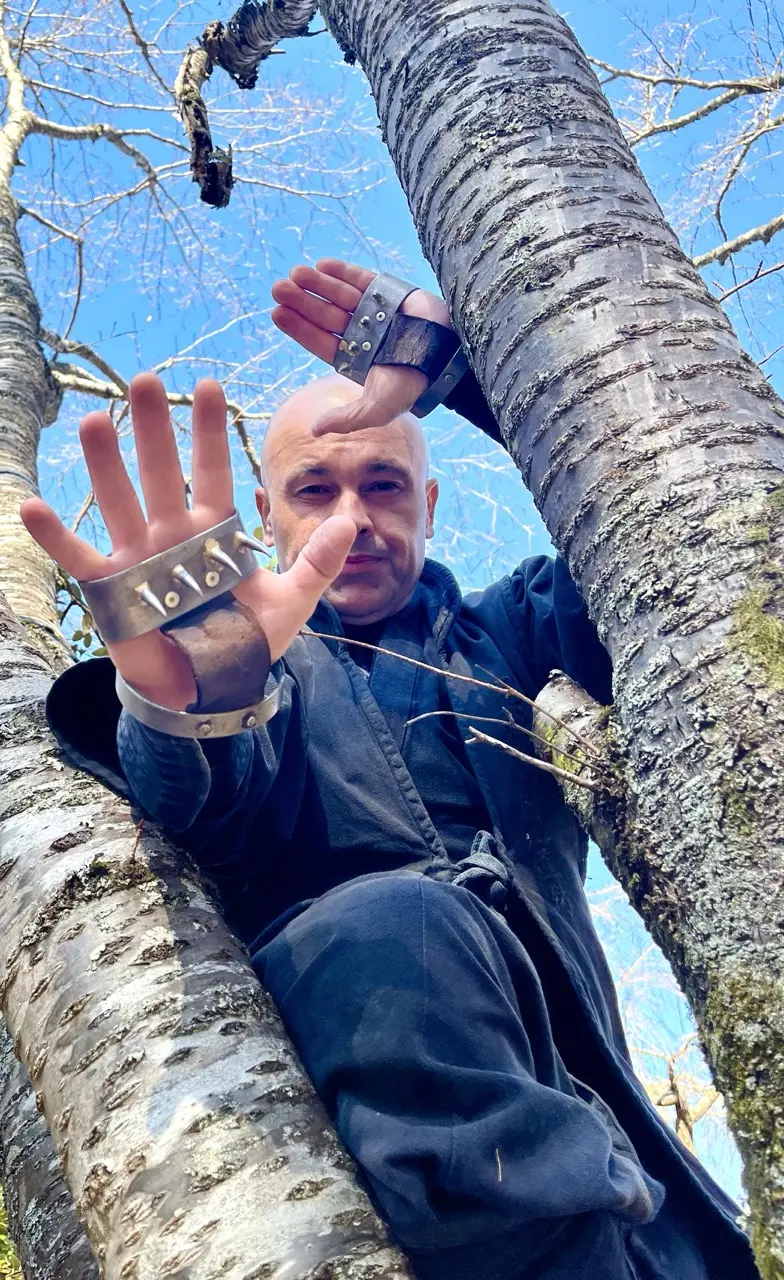
Learn progressively to understand trees, slopes and the surrounding environment, protecting your body without overreaching.
Weapons Training
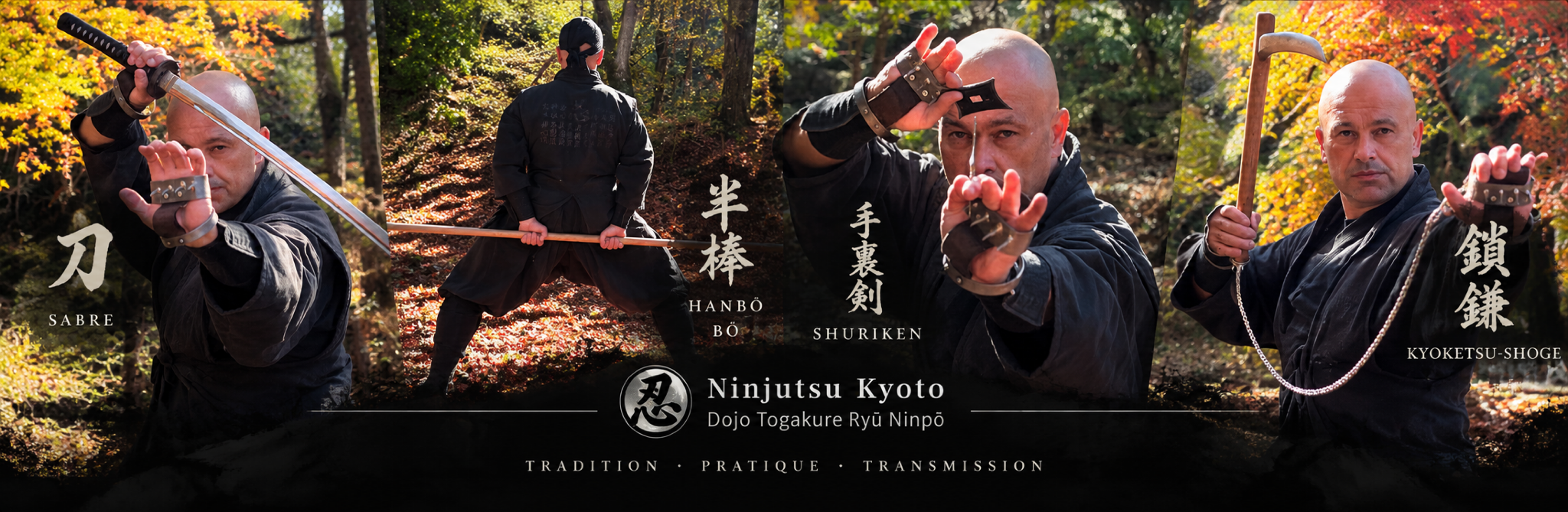
Sword, Hanbo, Bo & Shuriken
Sword & Muto Dori
Study blade alignment, distance, drawing and deflection, refining positioning and judgement when facing a weapon unarmed.
Hanbojutsu
Through the short staff, connect strikes, unbalancing and joint control into a continuous movement.
Bojutsu
Use the reach of a long staff and learn to convey direction and power through the whole body.
Shurikenjutsu
With strict attention to safety, practise bringing posture, distance, focus and the moment of release together.
Ninja Happo Hikenjutsu
Connect Togakure Ryu weapons and body movement, exploring principles that remain consistent as the weapon changes.
Adapting to Weapons
Read the line of attack, distance and angle without being distracted by the weapon’s form. Prioritise decisions that take you away from danger.
Adapting to Nature and Realistic Attacks
Slopes, roots, fallen leaves, wet ground, light, wind and narrow spaces: when the setting changes, a technique cannot always keep the same form.
Outdoors, we observe the ground and surroundings while selecting safe distances and positions against pushing, grabbing, striking, kicking or weapons. The aim is neither competition nor the recreation of dangerous acts. It is to develop calm judgement and movement that protect you and make escape possible when circumstances change unexpectedly.
Ninpō Taijutsu: connecting body, principles and decision
This teaching application draws in part on a reading of Masaaki Hatsumi’s 『戦国忍法図鑑』, supervised by Kiyoyuki Higuchi. Its discussion of restraint belongs to a modern source of transmission; the partner-training examples below are our present-day teaching applications.
In our teaching vocabulary, 体術 (Taijutsu) concerns use of the body; 忍術 (Ninjutsu), techniques and skills associated with shinobi; and 忍法 (Ninpō), the framework of principles and knowledge that can guide their application. These are reading aids whose usage varies across schools and authors, not three sealed historical categories.
Keeping the ego in check becomes observable in decisions: adjusting intensity to a partner, recognizing lost balance, stopping an unnecessary movement and creating distance rather than forcing an action. 礼節 (reisetsu), respectful and considerate conduct, supports safety and attention. Restraint is not passivity; it enables appropriate action.
Terrain provides concrete feedback: a root changes footing, a slope changes balance and a narrow space changes distance. Kamae, Taihenjutsu, Shinobi Aruki and weapons thus become ways to study observation, strategy and self-preservation. These present-day applications do not by themselves reconstruct medieval missions.
Understand Togakure Ryū Ninpō · Ninjutsu and Ninpō · Self-mastery and the meaning of 忍