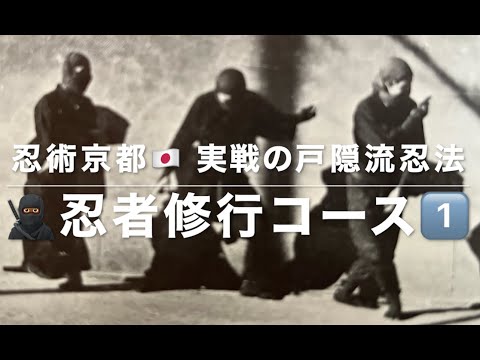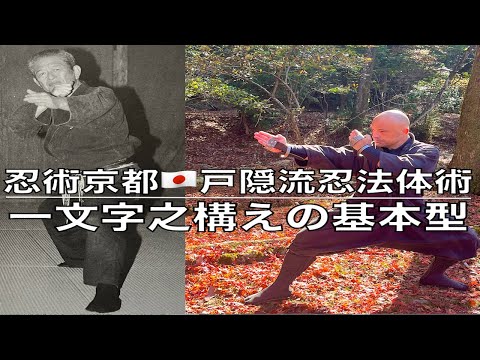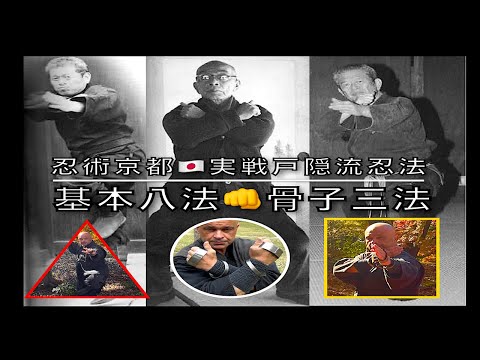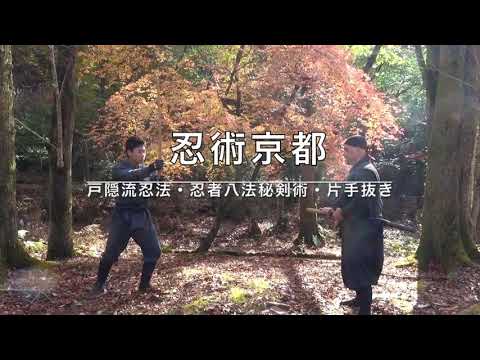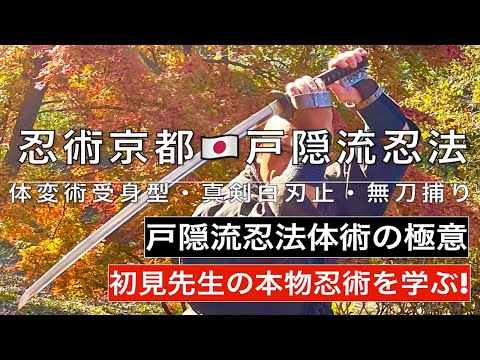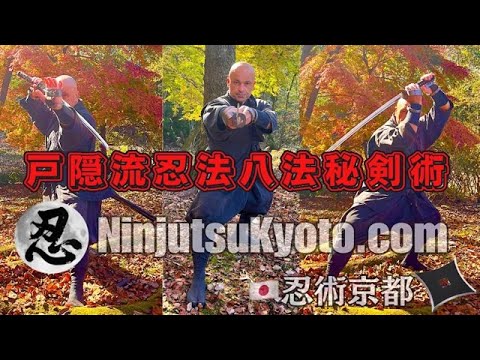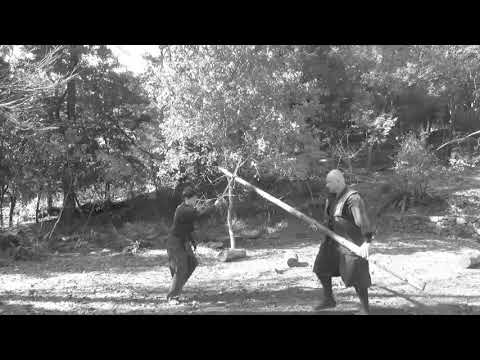
The Togakure Ryū Ninpō programme presented in Kyoto connects physical preparation, Taijutsu, weapons, observation and adaptation to terrain. Here Ninpō Taijutsu means testing principles through movement: distance, balance, awareness and decision. This organization describes our present-day teaching; it does not claim to reproduce an unchanged medieval syllabus shared by every shinobi or by every school.
Meditation, stealthy movement, traditional techniques and a deep connection with Japanese nature create a rare experience that brings together an ancestral martial art, harmony and self-discovery.
In this forest carpeted with petals, we invite you to experience the authentic spirit of Ninjutsu.
This living tradition is practised in a changing environment. Accounts of its antiquity belong to transmission; each claim about an ancient exercise requires a dated source.
1. Ninja Seishin: opening the practice and finding inner balance
The contemplative practices below belong to the dojo’s current presentation. Their inclusion does not show that they were required in every school or period. They should be distinguished from religious affiliation and any promise of powers.
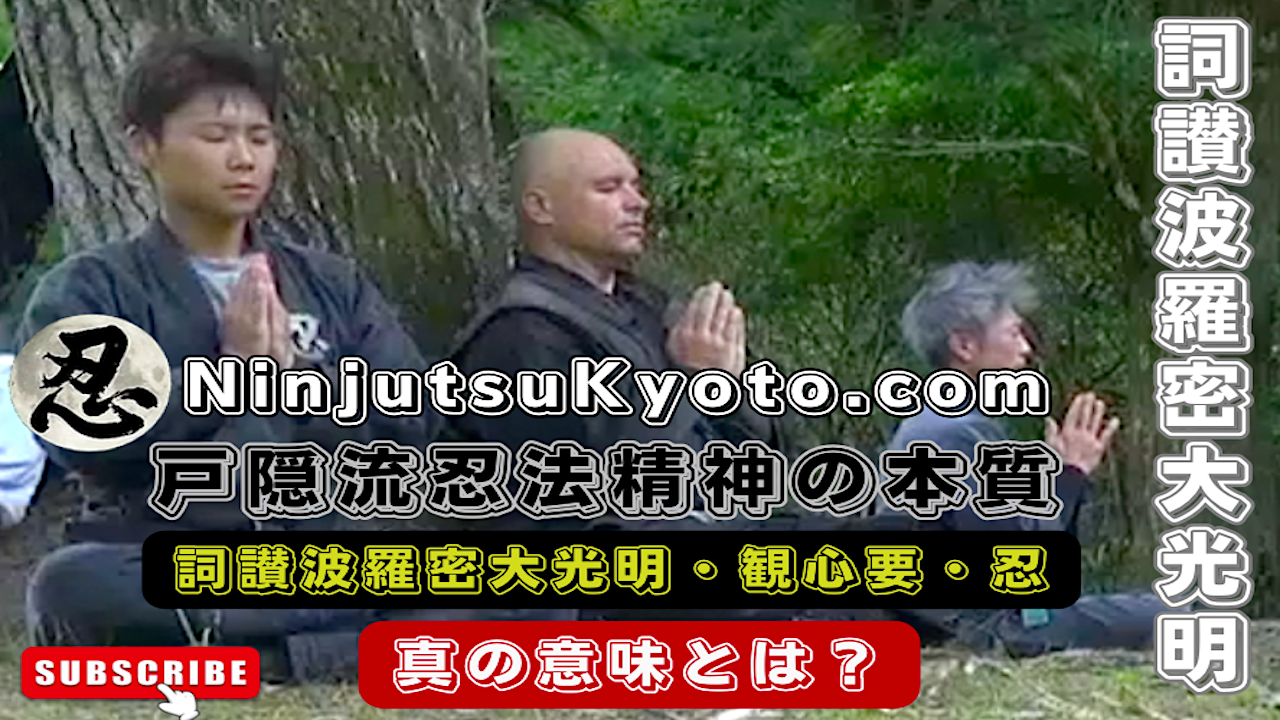
Zazen Mokuso & Fudoshin breathing: silent meditation techniques to calm the mind and connect with the forest.
Komyo Ajikan: mantra recitation, visualization and contemplation.
Kuji-kiri Goshin Ho: symbolic gestures and protective mantras to awaken inner strength.
2. Junan Taiso/Undo: flexibility exercises, physical preparation and agility
Natural warm-up: mindful walking, dynamic stretching and animal-inspired movements.
Taihenjutsu: the art of silent falls, rolls and fluid movement.
3. Kihon: fundamental techniques
Dakentaijutsu & Jutaijutsu: strikes, throws and controlling an opponent.
Nuki-ashi & Ashido-suri-ashi: traditional ninja stealth steps.
4. Buki jutsu: traditional weapons
Bo/Hanbo & Bokken: staff and wooden sword practice in natural terrain.
Senban nage, Bo/Shuriken-jutsu: the refined art of throwing blades.
Tanto & Kusarifundo: defense using short or flexible weapons.
Biken jutsu: Ninja sword techniques.
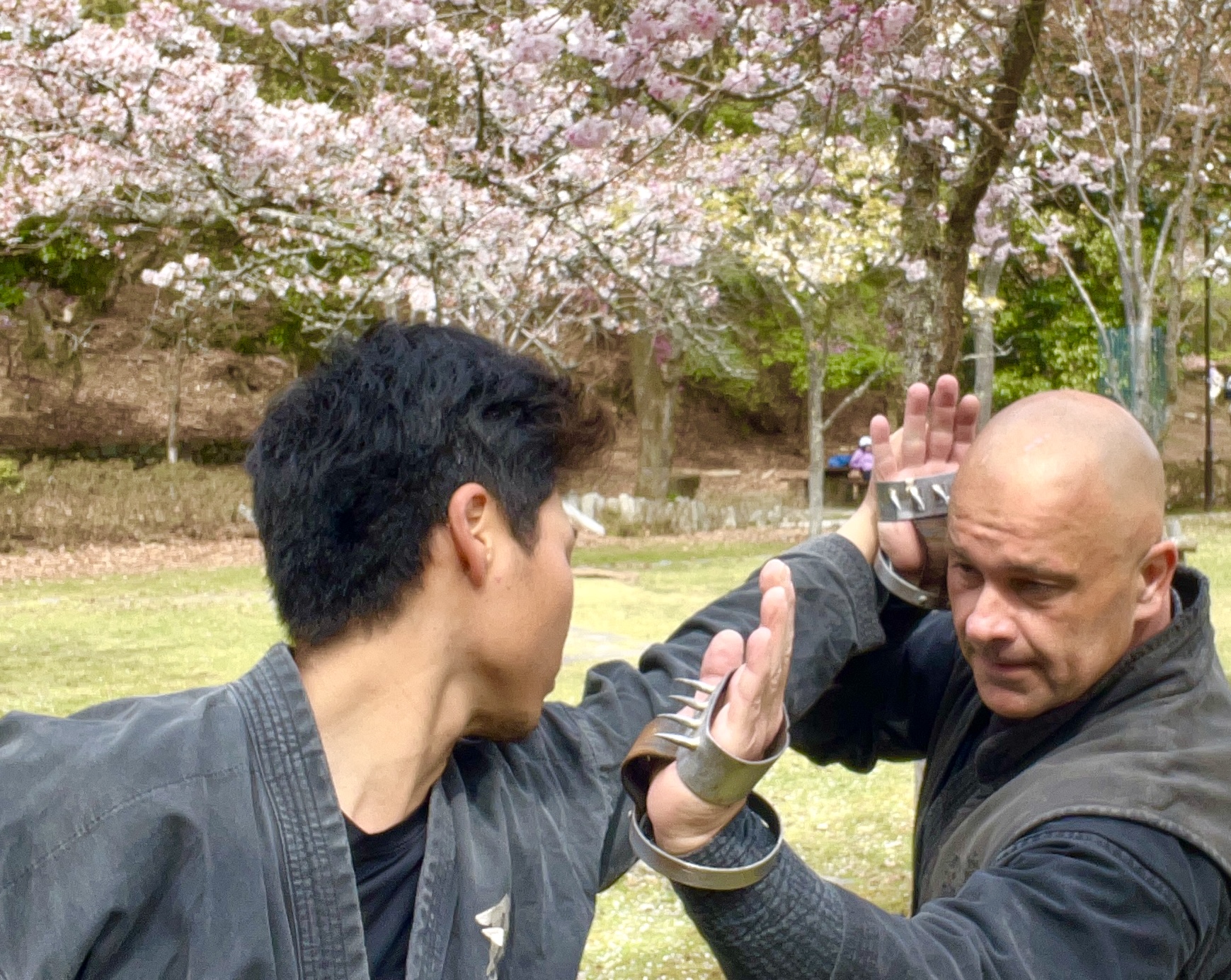
Tekko jutsu: hand-claw techniques.
5. Shinobi knowledge and environment
Shinobi-iri: infiltration and camouflage.
Suijutsu: silent movement on or in water.
Tenmon & Chimon: reading the stars, wind and natural signs to find one's way.
Intonjutsu: techniques for disappearing and escaping.
6. Historical methods
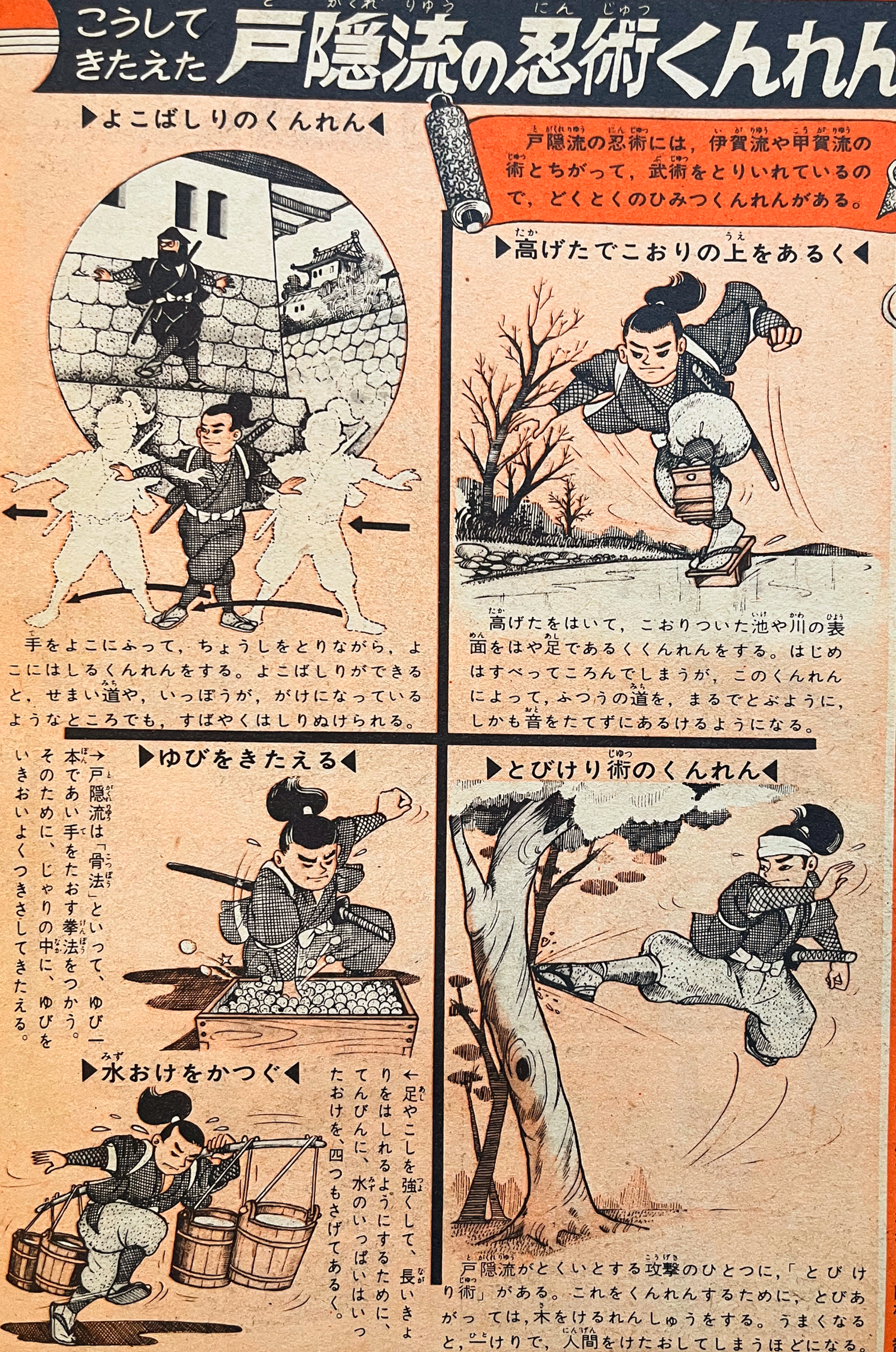
The following exercises are presented as training references and inspirations. Without precisely identified scrolls, their age and place in a historical syllabus are not established here.
Yokobashiri no Kunren: running sideways along a wall.
Takageta de Kori no Ue o Aruku: crossing ice in sandals with raised soles.
Yubi o Kitaeru: strengthening the fingers for climbing and gripping.
Mizuoke o Katsugu: carrying heavy buckets of water to build endurance.
Tobikeri Jutsu: a powerful jumping kick.
7. Training from childhood
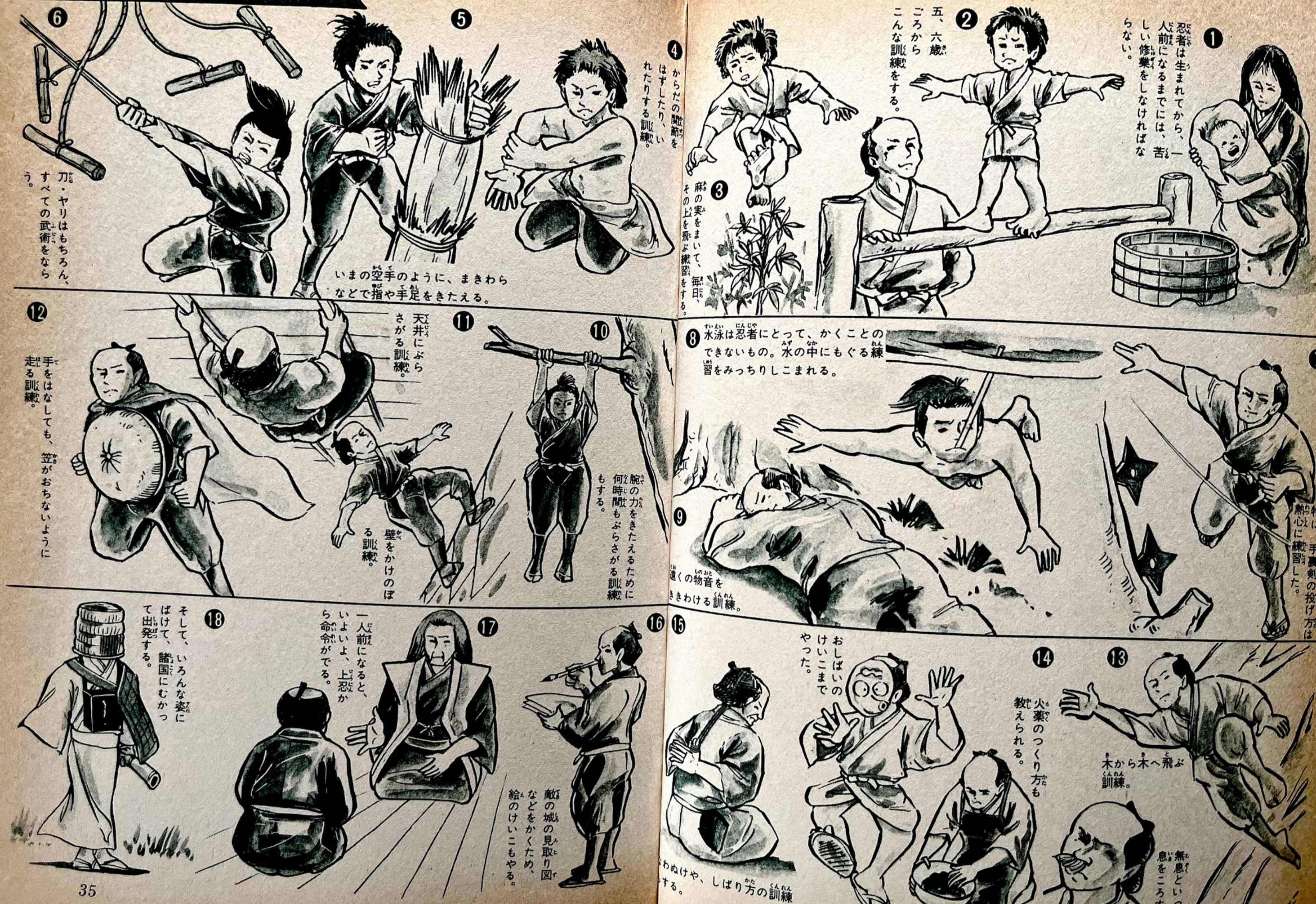
According to tradition, the ninja's path begins at a very young age.
Classical illustrations depict foundational exercises that still inspire our practice:
Balance courses on logs or ropes.
Silent jumps and controlled landings.
Crawling beneath natural obstacles.
Sling shooting and shuriken throwing.
Climbing trees and carrying sacks of rice or buckets of water.
Disguise and the art of blending into a crowd.
(These activities can be adapted for family workshops or introductory sessions.)
8. Sensory development and intuition
Kankaku Keiko: sharpening hearing, sight and smell to detect even the slightest presence.
Night navigation: recognizing terrain in the dark.
Perception exercises: observing a partner’s bodily cues and testing anticipation, without assuming extrasensory perception.
9. Closing and gratitude
Leave the training place immaculate: no trace.
Silent zazen Komyo Ajikan meditation beneath the flowering cherry trees, “Sakura,” and the maple trees, “Momiji,” in autumn.
A final bow to the forest as an expression of gratitude.
An invitation to experience it
Amid the whisper of the wind and the dance of petals, come and discover the very essence of the Ninja:
a union of technique, silence and harmony with nature.
Whether a beginner or an experienced practitioner, everyone can discover the spirit of Togakure Ryu Ninpo through this program:
agility, adaptability, unity with nature and an unshakable spirit.
Join us in Kyoto's forest of flowering cherry trees and begin your own Ninja story.
What is Ninpō Taijutsu in this practice?
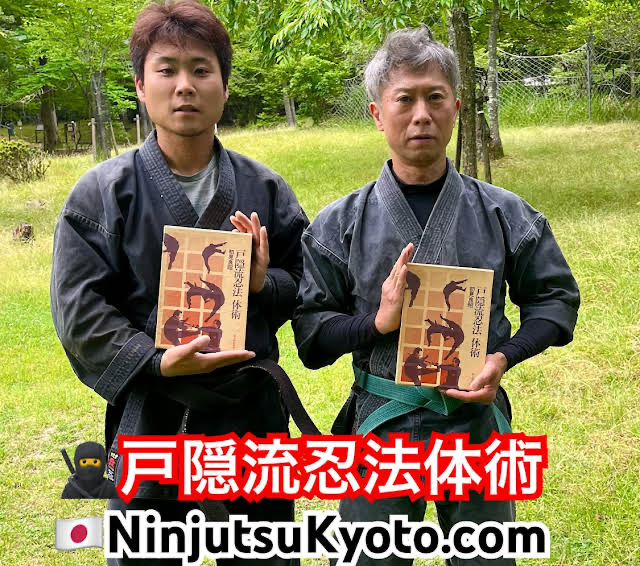
This teaching application draws in part on a reading of Masaaki Hatsumi’s 『戦国忍法図鑑』, supervised by Kiyoyuki Higuchi. Its discussion of restraint belongs to a modern source of transmission; the partner-training examples below are our present-day teaching applications.
In our teaching vocabulary, 体術 (Taijutsu) concerns use of the body; 忍術 (Ninjutsu), techniques and skills associated with shinobi; and 忍法 (Ninpō), the framework of principles and knowledge that can guide their application. These are reading aids whose usage varies across schools and authors, not three sealed historical categories.
Keeping the ego in check becomes observable in decisions: adjusting intensity to a partner, recognizing lost balance, stopping an unnecessary movement and creating distance rather than forcing an action. 礼節 (reisetsu), respectful and considerate conduct, supports safety and attention. Restraint is not passivity; it enables appropriate action.
Terrain provides concrete feedback: a root changes footing, a slope changes balance and a narrow space changes distance. Kamae, Taihenjutsu, Shinobi Aruki and weapons thus become ways to study observation, strategy and self-preservation. These present-day applications do not by themselves reconstruct medieval missions.
Understand Togakure Ryū Ninpō · Ninjutsu and Ninpō · Self-mastery and the meaning of 忍
Sources and historical notes
The three excerpts studied come from 初見良昭『戦国忍法図鑑』 — Sengoku Ninpō Zukan, by Masaaki Hatsumi, supervised by 樋口清之 (Kiyoyuki Higuchi), published by 新人物往来社 (Shin Jinbutsu Ōraisha). The National Diet Library catalogue confirms these responsibilities and publication in April 1978. This is a modern source of interpretation and transmission, not a document from the Sengoku period. The supplied photographs are identified as excerpts 1, 2 and 3; only page number 6 is visible on the first. The remaining page numbers and the precise printing of the photographed copy still need confirmation. French and English translations were prepared for this reading.
Bibliographical record — National Diet Library
- Documented history: what an identified source specifically supports.
- Traditional accounts: origin and lineage narratives reported as such.
- Author interpretation: analogies, hypotheses and judgements in the excerpts.
- Modern interpretation: teaching applications at the dojo, distinct from historical evidence.
Requires further historical verification: any medieval attribution not independently documented here. Editorial supervision of the book does not, by itself, corroborate every assertion it contains.
Mie University — interview with Yūji Yamada — independent context on intelligence gathering and the limits of the assassin image. This interview does not validate the excerpts’ genealogy or hydraulic claims.