1. Origins and Historical Background

1.1 Feudal Japan and the Role of the Shinobi
To understand Ninjutsu properly, we first need to understand the background of feudal Japan. At that time, Japan was divided into territories governed by daimyō, with the warrior class occupying the ruling position. Warriors were loyal to their lords and protected their domains with the sword. Amid constant warfare and struggles for power, however, many situations called for covert action and espionage rather than direct confrontation alone. This is where the ninja, or shinobi (忍び), came in. Their role was to support the daimyō through intelligence gathering, sabotage and infiltration, using means other than open battle.
Iga and Kōga occupy an important place in these accounts. However, contrasting always-visible samurai with ninja as a separate class is misleading: an intelligence role does not by itself determine social status.
1.2 The Development of Ninjutsu Schools
Contemporary teaching brings several traditions together. Togakure Ryū and Kumogakure Ryū are associated with Ninjutsu, while Gyokko Ryū and Kotō Ryū are also studied for their body-based martial traditions. Teaching them together does not make them all the same historical category of “ninja schools”.
Togakure Ryū, in particular, is considered one of the oldest schools and is traditionally said to have been founded by Togakure Daisuke. It is known for preserving a broad range of methods, including Taijutsu, weapons techniques, concealment and intelligence gathering.
1.3 Historical Documents
The following titles are starting points for study. Attribution, date and passage must be checked in an identified edition before supporting a specific claim.
Bansenshūkai (『万川集海』)
An extensive work attributed to Fujibayashi Samuji Yasutake, covering ninja strategy, stratagems and principles of conduct.
Ninpiden (『忍秘伝』)
A work said to have been transmitted within Iga Ryū, teaching the mindset of the shinobi and numerous secret methods.
Shōninki (『正忍記』)
Said to compile the traditions of Kishū Ryū, it describes concealment, observation and psychological tactics in detail.
An expression to distinguish from an ancient title: Ninpō Ikkan (忍法一貫)
The expression belongs to the vocabulary of transmission. Without a verified bibliographical reference, we do not present it as a fourth ancient treatise comparable with the preceding titles.
These texts are sometimes written in coded or figurative language. Their interpretation and oral transmission have helped preserve the character of “secret teachings” in Ninjutsu. One interesting feature is that they explore spirituality and philosophy in depth, rather than dealing solely with fighting techniques.
What do the excerpts say about Ninjutsu?
Japanese source · 初見良昭『戦国忍法図鑑』 · 3
忍術というのは、もともと古武道のひとつである。
Translation : “Ninjutsu is originally one of the old martial arts.”
Interpretation : The author situates the subject within martial arts. This statement neither dates each technique’s origin nor defines an unchanging historical category.
Japanese source · 初見良昭『戦国忍法図鑑』 · 3
忍術は、人を無理に攻撃したり、命をとったりすることではない。
Translation : “Ninjutsu is not about arbitrarily attacking people or taking their lives.”
Interpretation : This is the source’s ethical position. It allows discussion of restraint without denying the violence of historical conflicts.
Who are the watari-ninja?
In 『戦国忍法図鑑』, Masaaki Hatsumi describes 渡り忍者 (excerpt 1), shinobi travelling between regions for employment, intelligence gathering and service to lords. In its account, settling under a particular lord could lead to designations such as “Takeda ninja” or “Uesugi ninja”. This is the author’s explanation of these names, not a comprehensive classification or a proven origin for each group.
The same sheet links Hattori, Momochi and Fujibayashi to Ōtomo no Hosohito (大伴細人) using 伝えられている, “tradition relates”. It also uses といわれている, “it is said”, for continental transmissions. Its link to Prince Shōtoku’s period is an inference (推定できる), not an earliest dated record established here.
Terrain, calculation and water: how far does the account go?
In 『戦国忍法図鑑』, Hatsumi attributes orientation, distance and angle measurement, mining and water-management knowledge to shinobi serving the Takeda. It connects their work with Kōshū-ban, mines and Shingen-zutsumi. These are the author’s attributions: the existence of mines or flood-control works does not establish who designed or operated them.
The phrase “忍者は数学者であり、科学者であった。” (“Ninja were mathematicians and scientists.”) characterizes versatility in the author’s account. It should not become a universal definition or project modern professional categories uncritically onto the past. The water passage is examined in our Ninjutsu–Ninpō comparison.
What does 忍薬 cover in this source?
Excerpt 2 mentions remedies, stimulants intended to maintain wakefulness, wound treatments, haemostatics and antidotes. It connects carrying and selling medicines with travel, contact with local people and intelligence gathering. This suggests a possible intersection of care, mobility and information gathering.
The document does not establish these products’ effectiveness or composition. No recipes are given here. Its proposed links to later itinerant medicine sales, 配置売薬 and 香具師 require other evidence and are not presented as established.
How do roles change?
Excerpts 1 and 3 describe a shift from wartime missions towards guarding, surveillance, protection and armed-unit service in the Edo period. Excerpt 3 connects Negoro-ji, its sōhei and firearms with manufacturing accounts involving Tanegashima and Kunitomo. Claims about particular actors, transferred methods and recruitment need separate verification.
The useful question is how skills were reused, not an equation of “musketeer = ninja”. Oniwaban, Hyakunin-shū and Sennin-shū are not automatic synonyms for shinobi. For the Sennin-shū, the author himself writes おそらく (“probably”): that hypothesis must remain a hypothesis.
2. Philosophy and Fundamental Principles
2.1 Ninpō: methods, principles and conduct
Ninjutsu and Ninpō can overlap. The former often emphasizes methods; the latter can refer to a framework of principles, knowledge and conduct. 法 does not automatically mean “higher spirituality”, and 術 does not exclude judgement or inner discipline.
In the philosophy of Ninjutsu, the spirit of nin—the mindset that endures adversity and adapts to every situation—is considered important. This also applies to everyday life, cultivating an attitude of continuous awareness of the present moment and flexible responses to one’s surroundings and circumstances.
2.2 Flexibility, Stealth and Resolve
Three useful points for our teaching, rather than a universal classification of shinobi thought:
Flexibility
Developing the ability to respond immediately to unpredictable situations, using strength at times and strategy at others, acting alone or in coordination with companions, and operating across varied terrain.
Stealth
Learning not only to hide physically, but also to remain unobtrusive mentally and socially.
Resolve — kakugo (覚悟)
Kakugo concerns resolve and readiness to face a situation. Environmental awareness is a complementary practice, not a translation of the word.
2.3 Balancing Compassion and the Need to Fight
Rejecting gratuitous violence is an ethical position explicitly defended in excerpt 3 below. It describes an ideal of conduct, not the documented behaviour of every historical actor.
In present-day practice, restraint means assessing danger, avoiding escalation and choosing an appropriate action. It does not retrospectively justify wartime violence.
3. Fundamental Ninjutsu Techniques
3.1 Taijutsu: The Art of Using the Body
Taijutsu (体術) concerns the use and movement of the body. In the teaching presented here, it includes:
Daken Taijutsu (打拳体術)
Striking methods that use the whole body, such as punches, kicks, elbow strikes and knee strikes.
Jūtaijutsu (柔体術)
Throws, joint locks, strangles and holds, among other methods.
Taihenjutsu (体変術)
Body movement and mobility skills, such as ukemi, rolling, leaping over obstacles and footwork.
Taijutsu in Ninjutsu is characterised by skilfully redirecting or absorbing an opponent’s movement and force. Rather than adhering too rigidly to traditional postures or trajectories, it often seeks unexpected angles and timing.
3.2 Buki Jutsu: Handling a Variety of Weapons
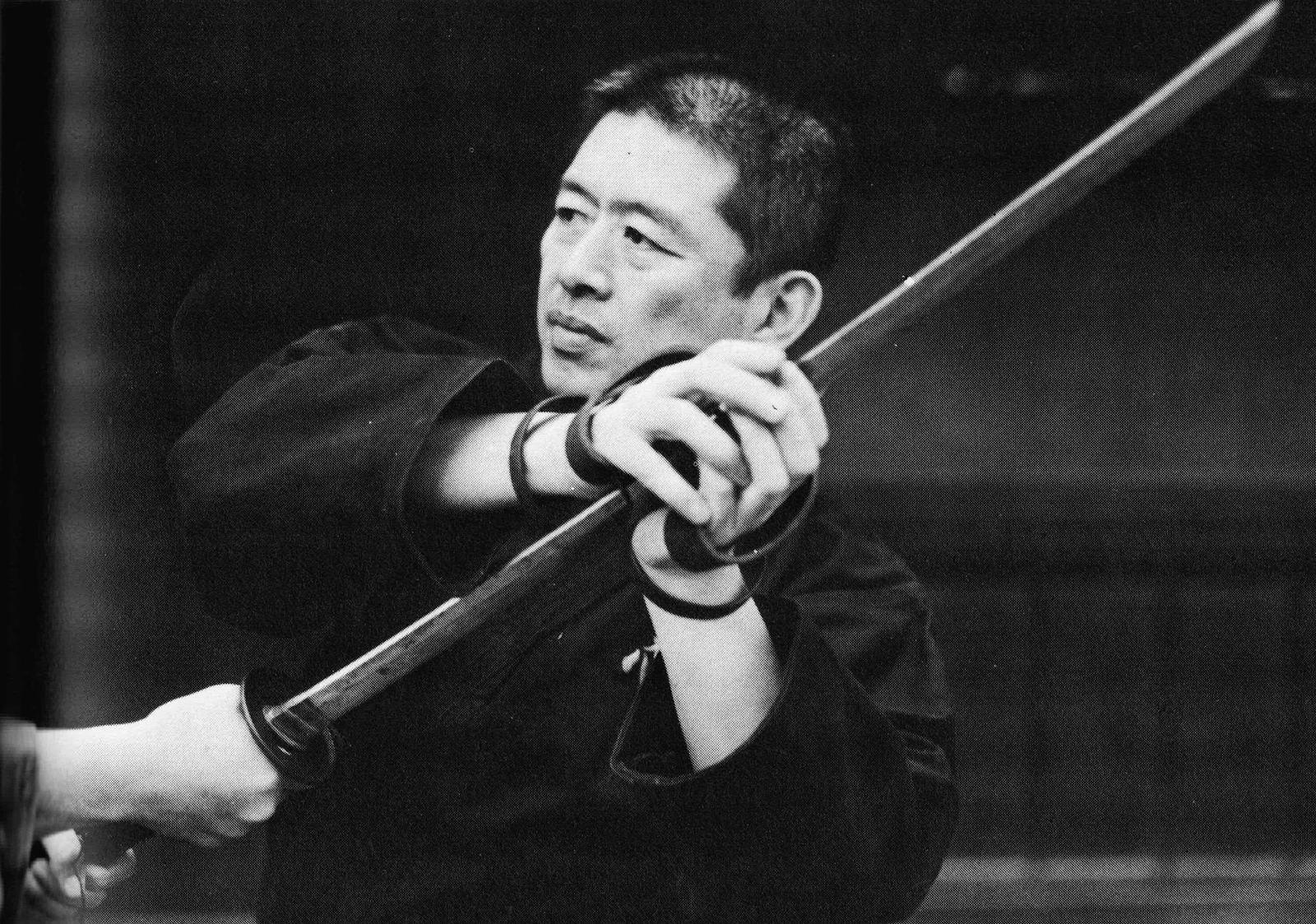
Ninjutsu features a wide variety of weapons. One of the ninja’s strengths is selecting them according to the situation and purpose, and using them with versatility. Representative weapons include:
Katana and Ninjatō (刀・忍者刀)
Modern presentations use ninjatō for certain training swords or designs associated with ninja. This does not establish a standard sword carried by all historical shinobi.
Shuriken (手裏剣)
These take many forms, including cross-shaped and straight types. They are used to make an opponent at a distance flinch or to interfere with their use of weapons.
Kusarigama (鎖鎌)
A weapon consisting of a sickle connected to a weight by a chain. It allows both attack and defence at close and longer range.
Bō and Hanbō (棒・半棒)
Bō and hanbō develop work at different ranges: a six-shaku staff and a three-shaku staff are not the same length.
Tantō (短刀)
A dagger suited to close combat or use in dark places.
Ninja value flexible thinking that allows everyday objects and natural materials to be adapted as weapons as well.
3.3 Concealment and Infiltration Techniques
The methods for acting without attracting attention could be described as the defining strength of Ninjutsu. They include the following practices and skills:
Walking without making footsteps audible: footwork, breathing and methods of synchronising with surrounding sounds.
Covert movement using vegetation and terrain: camouflage and movement in darkness.
Examining weaknesses in buildings and devising ways to enter through hidden openings or from high places.
Strategies for diverting another person’s attention, such as disguise, psychological tactics and the spread of misleading information.
These techniques always require strong concentration and calm powers of observation.
3.4 Using Natural Elements: Katon, Suiton, Doton and Others
Ninjutsu also transmits methods that skilfully use natural elements such as fire (Katon, 火遁), water (Suiton, 水遁), earth (Doton, 土遁), wind and air. In practice, their main applications are tactical rather than magical: Katon involves smoke screens or explosions using fire; Suiton involves underwater activity or the use of waterways; and Doton involves securing hiding places using the ground or terrain.

4. Spirituality and Esoteric Elements
4.1 The Influence of Mikkyō and Shugendō
Some texts and teachings connect Ninjutsu with Mikkyō and Shugendō. Ritual gestures, recitations and visualizations need to be understood within their religious contexts and particular transmissions, without promises of supernatural abilities.
The supplied excerpts emphasize this proximity through gyōja, yamabushi and Katsuragi. They do not demonstrate that Ninjutsu originated in a single religious tradition or that all ninja were ascetics.
4.2 Kuji Goshinhō and Kuji-kiri
The following nine syllables appear in presentations of kuji. We assign them neither a single translation nor powers here; practices, readings and meanings vary between traditions.
臨 — Rin
兵 — Pyō
闘 — Tō
者 — Sha
皆 — Kai
陣 — Jin
列 — Retsu
在 — Zai
前 — Zen
Religious explanations, symbolic readings and modern teaching adaptations should be distinguished.
5. Ninjutsu in the Modern World
5.1 Inheritors of a Legacy: Masaaki Hatsumi and the Bujinkan
Hatsumi Masaaki, founder of the Bujinkan, played a major role in the international transmission of teachings received from Takamatsu Toshitsugu. Descriptions such as “the last true ninja” belong to a public image, not a verifiable historical category.
The Bujinkan offers comprehensive instruction in several schools, including Togakure Ryū, Gyokko Ryū, Kotō Ryū and Shinden Fudō Ryū, teaching technique, strategy, philosophy and ethics together. Through overseas seminars led by the master, known as taikai (大稽古), Ninjutsu became widely known outside Japan as well.
5.2 The Diversification of Dojos and Teaching
The contemporary landscape includes the Bujinkan, Genbukan and Jinenkan. These organizations’ institutional histories and teaching choices require separate study.
Teaching styles vary widely: some dojos focus on practical self-defence close to street fighting, while others emphasise traditional and spiritual aspects.
Jérôme Pailliette has practised Ninjutsu since 1988, studied in Japan since 1999 and taught in Kyoto since 2006. This experience informs the teaching presented here; it is not evidence for ancient historical narratives.
“Having trained for more than 35 years under the guidance of Daishihan Masaaki Hatsumi, I hope to pass on his teachings in a way that fits a contemporary context. Kyoto’s rich natural surroundings provide an ideal setting for covert movement, flexible use of the body and the cultivation of alertness. In the forest, a single footstep or the feel of fallen leaves can reveal how one makes one’s presence stand out—or disappear. In this way, I continue working to bring the traditional spirit and techniques inherited from my teacher into the present.”
In Kyoto, outdoor practice helps us observe footing, terrain and a partner’s reactions. We develop judgement and calm without claiming to recreate every condition of historical shinobi life.
5.3 Ninjutsu and Popular Culture
Today, popular culture—including films, manga and games—has made the ninja a globally recognised icon. Well-known examples include Naruto and Teenage Mutant Ninja Turtles, whose spectacular Ninjutsu and finishing moves attract fans ranging from children to adults.
An interest sparked by manga or films can lead to serious study. Teaching then distinguishes imagination, historical evidence, transmission narratives and what can actually be tested in practice.
6. The Ninjutsu Training System: Structure and Progress
6.1 Progressive, Individually Adapted Learning
Learning Ninjutsu is not simply a matter of memorising a list of techniques. It is a comprehensive path whose true value emerges through physical and mental self-development. Many dojos therefore adjust their curricula to suit each person’s age, physical condition and goals, offering individualised instruction.
Training begins with warm-ups such as stretching and strength exercises, followed by foundational work on basic postures, striking and ukemi, before progressing to weapons and advanced body movement. Practical training outdoors and in natural surroundings, rather than only indoors, may also form an important part of the programme.
6.2 Cultivating Alertness and Observation
Ninjutsu training asks practitioners to pay attention not only inside the dojo, but also in everyday life. For example, they are encouraged to develop habits concerning how they walk through town, where they direct their gaze, and how they sense the surrounding atmosphere and changes in temperature.
Observing one’s inner state is also important. By noticing physical tension and emotional fluctuations, and learning ways to regulate them, practitioners can gain significant benefits not only in combat but also in areas such as stress management.
6.3 Randori and Practical Simulations
In addition to kata keiko, or practice of forms, many dojos introduce randori—sparring resembling free exchanges of attack and defence. This develops practical application and the ability to improvise.
Training may also involve more realistic exercises, such as covert movement at night or outdoors, or infiltration simulations using sensors or designated sentries, deepening tactical and psychological understanding. Through such training, practitioners come to understand experientially the concepts of “winning without being seen” and “exploiting an opponent’s blind spot,” which are among the true attractions of Ninjutsu.
7. The Value of Studying Ninjutsu Today
7.1 Self-defence and Building Confidence
Today, there is no longer a need to infiltrate an enemy castle, but Ninjutsu remains useful as a means of protecting oneself. Taijutsu includes many techniques suited to self-defence, such as redirecting an opponent’s force, applying joint locks and taking away weapons.
Through practising these techniques, one can naturally develop confidence and calm judgment, cultivating a mindset less prone to panic in tense situations.
7.2 Discipline and Growth in Life
As in many martial arts, Ninjutsu places importance on the process of improving oneself through sustained practice. Repeated training develops patience, courtesy and the habit of persevering in one’s efforts, which can be highly useful in daily life.
Furthermore, the principle of nin—endurance—is very beneficial in study, work and relationships. It helps develop the ability to address the task at hand patiently, without being carried away by a passing emotion.
7.3 Spiritual Exploration and Unity with Nature
Ninjutsu contains many elements that deepen spirituality, such as mountain and forest training and meditation. Accepting the forces of nature and finding harmony with them is also appealing as a way to recover the “inner stillness” and “connection with nature” that are easily lost in busy modern society.
Through such practice, many people re-examine themselves and cultivate a richer outlook on life.
8. How to Begin Ninjutsu
8.1 Finding a Trustworthy Dojo or Instructor
An instructor who has properly inherited the tradition is essential to learning Ninjutsu. Look for a dojo belonging to an established organisation such as the Bujinkan, Genbukan or Jinenkan and, if possible, visit or take part in a trial session.
It is important to research the instructor’s background, school and teaching approach, and to assess whether these seem compatible with your own aims and style.
8.2 Preparing Training Clothes and Equipment, and Practising Regularly
In many places, protective equipment and uniforms are not specified as clearly as in karate or judo, although some dojos recommend black training clothes, or keikogi/dōgi. For weapons, it is common to consider safety by using wooden swords, rubber or plastic imitation blades, and practice shuriken.
What matters most is continued practice. Steady repetition is essential for developing basic fitness and flexibility and thoroughly understanding the principles behind the techniques.
8.3 Studying History and Philosophy
Ninjutsu is by no means made up of physical techniques alone. Studying its historical background and spirituality, and reading historical documents and discussions of martial arts, allows for a deeper understanding.
It is also worth exploring religious and philosophical traditions connected with Ninjutsu, such as Mikkyō and Shugendō. Incorporating habits such as meditation into daily life can also help develop equanimity and concentration.
9. Conclusion: What an Ancient Martial Art Asks of the Present
Understanding Ninjutsu beyond fiction requires connecting the words of sources, their context and guided practice. None of these dimensions replaces the others.
Present-day practice can develop the body, consideration for others and self-knowledge. These contemporary aims do not prove an unchanged philosophy extending back to periods of warfare.
The Ninjutsu–Ninpō comparison clarifies the overlap between these terms. The article on 忍 and Shugendō develops the ethical and religious reading without confusing proximity with lineage.
The dojo’s aim remains sincere study, testing applications and thoughtful transmission. The references below are reading suggestions; only explicitly checked quotations are presented as such.
References and Recommended Reading
Bansenshūkai (『万川集海』)
A representative source covering ninja strategy, stratagems and philosophy.
Ninpiden (『忍秘伝』)
A work associated with Hattori Hanzō and Iga Ryū, describing concealment techniques and principles of conduct in detail.
Shōninki (『正忍記』)
A work attributed to Natori Masazumi, exploring psychological methods and shinobi ethics in depth.
The books of Masaaki Hatsumi
Explanations of the techniques, philosophy and history of the Bujinkan’s various schools. They also record Toshitsugu Takamatsu’s teachings.
Literature on Mikkyō and Shugendō

Reading texts should be accompanied by verifiable references. Without a checked edition and passage, we do not quote the “Ninjutsu Hiketsubun” here. Personal practice remains concrete: attention, humility and discernment.

Appearances, the pursuit of meaningless status, ego, arrogance or the desire for recognition must not obstruct this path. The true journey consists in cultivating fudōshin (不動心) and devoting oneself to mastering techniques in realistic situations through daily individual practice. This is grounded in the teachings and traditions of Toshitsugu Takamatsu and Masaaki Hatsumi.
This is the very essence of Ninpō.
Jérôme Pailliette
Instructor, Kyoto Ninjutsu Dojo
Explore each dimension
Sources and historical notes
The three excerpts studied come from 初見良昭『戦国忍法図鑑』 — Sengoku Ninpō Zukan, by Masaaki Hatsumi, supervised by 樋口清之 (Kiyoyuki Higuchi), published by 新人物往来社 (Shin Jinbutsu Ōraisha). The National Diet Library catalogue confirms these responsibilities and publication in April 1978. This is a modern source of interpretation and transmission, not a document from the Sengoku period. The supplied photographs are identified as excerpts 1, 2 and 3; only page number 6 is visible on the first. The remaining page numbers and the precise printing of the photographed copy still need confirmation. French and English translations were prepared for this reading.
Bibliographical record — National Diet Library
- Documented history: what an identified source specifically supports.
- Traditional accounts: origin and lineage narratives reported as such.
- Author interpretation: analogies, hypotheses and judgements in the excerpts.
- Modern interpretation: teaching applications at the dojo, distinct from historical evidence.
Requires further historical verification: any medieval attribution not independently documented here. Editorial supervision of the book does not, by itself, corroborate every assertion it contains.
Mie University — interview with Yūji Yamada — independent context on intelligence gathering and the limits of the assassin image. This interview does not validate the excerpts’ genealogy or hydraulic claims.
Kai City — Shingen-zutsumi — documentation of the flood-control site; it does not establish attribution to ninja.